RISK / DATA / MSG (PRODUCT) / CHEMICAL POISONS / LIES / VIDEOS / ABOUT US / DONATE / CONTACT / BLOG / PETITION / THE PERFECT POISON


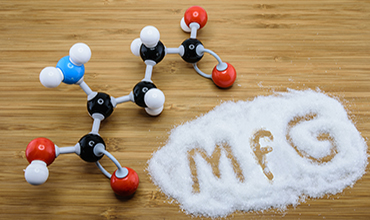
Everyone knows that some people react to the food ingredient monosodium glutamate (MSG). What many don’t know, is that more than 40 different ingredients contain the chemical in monosodium glutamate -- Manufactured free Glutamate (MfG) -- that causes these reactions. The following list has been compiled over the last 30 years from consumer reports and information provided by manufacturers and food technologists.
Names of ingredients that contain Manufactured free Glutamate (MfG) *1 -- Updated May 2021
Names of ingredients that always contain MfG:
Glutamic acid (E 620) *2Glutamate (E 620)
Monosodium glutamate (E 621)
Monopotassium glutamate (E 622)
Calcium glutamate (E 623)
Monoammonium glutamate (E 624)
Magnesium glutamate (E 625)
Natrium glutamate
anything “Hydrolyzed”
any “Hydrolyzed protein”
Calcium caseinate, Sodium caseinate
Yeast extract, Torula yeast
Yeast food, Yeast nutrient, Nutritional yeast
Autolyzed yeast, Brewer's yeast
Gelatin
Textured protein
Whey protein
Whey protein concentrate
Whey protein isolate
Soy protein
Soy protein concentrate
Soy protein isolate
anything “Protein”
anything “Protein fortified”
anything "Protein concentrate"
anything "Protein isolate"
Zinc proteninate
anything "Proteninate"
Soy sauce
Soy sauce extract
Protease
anything “Enzyme modified”
anything containing “Enzymes”
anything “Fermented”
Vetsin
Ajinomoto
Names of ingredients that often contain or produce MfG during processing:
Carrageenan (E 407)Bouillon and broth
Stock
any “Flavors” or “flavoring”
Natural flavor
Maltodextrin
Oligodextrin
Citric acid, Citrate (E 330)
anything “Ultra-pasteurized”
Barley malt
Malted barley
Pectin (E 440)
Malt extract
Seasonings
Soy milk
*1 Glutamic acid found in unadulterated protein does not cause adverse reactions. To cause adverse reactions, the glutamic acid must have been processed /manufactured, released from protein during processing, or come from protein that has been fermented.
*2 E numbers are use in Europe in place of food additive names.
The following are ingredients suspected of containing or creating sufficient processed free glutamic acid to serve as MfG-reaction triggers in HIGHLY SENSITIVE people:
Corn starchCorn syrup
Modified food starch
Lipolyzed butter fat
Dextrose
Rice syrup
Brown rice syrup
Milk powder
Reduced fat milk (skim; 1%; 2%)
most things “Low fat” or “No fat”
anything “Enriched”
anything “Vitamin enriched”
anything “Pasteurized”
Annatto
Vinegar
Balsamic vinegar
certain Amino Acid Chelates (Citrate, Aspartate, and Glutamate are used as chelating agents with mineral supplements.)
The following work synergistically with the ingredient monosodium glutamate (MSG) to enhance flavor. If they are present for flavoring, so is MSG:
Disodium 5’-guanylate (E 627) / Disodium 5’-inosinate (E-631) / Disodium 5'-ribonucleotides (E 635)
Reminders
Things called “plant-based" proteins (such as the Impossible Burger, Beyond Meat and Just EGG) are made with excitotoxic – brain damaging – free glutamic acid. Free glutamate made from plants such as soy or mung beans causes brain damage and adverse reaction just like any other source of free glutamate.
Low fat and no fat milk products often contain milk solids that contain MfG and many dairy products contain carrageenan, guar gum, and/or locust bean gum. Low fat and no fat ice cream and cheese may not be as obvious as yogurt, milk, cream, cream cheese, cottage cheese, etc., but they are not exceptions.
Protein powders contain glutamic acid, which, invariably, will be Manufactured free Glutamate (MfG). Individual amino acids are not always listed on labels of protein powders. If you see the word “protein” in an ingredient label, the product contains MfG.
At present there may be an FDA requirement to include the protein source when listing hydrolyzed protein products on labels of processed foods. Examples are hydrolyzed soy protein, hydrolyzed wheat protein, hydrolyzed pea protein, hydrolyzed whey protein, hydrolyzed, corn protein. If a tomato, for example, were whole, it would be identified as a tomato. Calling an ingredient tomato protein indicates that the tomato has been hydrolyzed, at least in part, and that Manufactured free Glutamate (MfG) is present.
Disodium guanylate and disodium inosinate are relatively expensive food additives that work synergistically with inexpensive MSG. Their use suggests that the product has MSG in it. They would probably not be used as food additives if there were no MSG present.
Reactions have been reported from soaps, shampoos, hair conditioners, and cosmetics, where MfG is hidden in ingredients with names that include the words "hydrolyzed," "amino acids," and/or "protein." Most sun block creams and insect repellents also contain MfG.
Drinks, candy, and chewing gum are potential sources of hidden MfG and/or aspartame, neotame. and AminoSweet (a relatively new name for aspartame). Aspartic acid, found in neotame, aspartame (NutraSweet), and AminoSweet, ordinarily causes reactions in MfG sensitive people. (It would appear that calling aspartame "AminoSweet" is industry's method of choice for hiding aspartame.) We have not seen Neotame used widely in the United States.
Aspartame will be found in some medications, including children's medications. For questions about the ingredients in pharmaceuticals, check with your pharmacist and/or read the product inserts for the names of “other” or “inert” ingredients.
Binders and fillers for medications, nutrients, and supplements, both prescription and non-prescription, enteral feeding materials, and some fluids administered intravenously in hospitals, may contain MfG.
According to the manufacturer, Varivax–Merck chicken pox vaccine (Varicella Virus Live), contains (or contained) L-monosodium glutamate and hydrolyzed gelatin, both of which contain Manufactured free Glutamate (MfG) which causes brain lesions in young laboratory animals, and causes endocrine disturbances like OBESITY and REPRODUCTIVE disorders later in life. It would appear that most, if not all, live virus vaccines contain some ingredient(s) that contains MfG.
According to the CDC, as listed in its Vaccine Excipient & Media Summary (Appendix B of the “Pink Book”), there are more than 35 vaccines presently in use that obviously contain ingredients that contain MfG.
When ingested, reactions to MfG are dose related, i.e., some people react to even very small amounts. MfG-induced reactions may occur immediately after ingestion or after as much as 48 hours. The time lapse between ingestion and reaction is typically the same each time for a particular individual who ingests an amount of MfG that exceeds his or her individual tolerance level.
Remember: By food industry definition, all MfG is "naturally occurring." "Natural" doesn't mean "safe." "Natural" only means that the ingredient started out in nature like arsenic and hydrochloric acid.